Being involved in an auto accident or a sudden physical impact can be a frightening and overwhelming experience. Even in minor collisions, the force generated can exert extreme pressure on your body. One of the most common injuries resulting from these unexpected events is whiplash. Healing takes time, but getting the right care early is vital. Understanding the subtle and obvious warning signs can help you address structural damage before it turns into chronic discomfort. We firmly believe that back and joint pain should never prevent you from enjoying life. Moreover, identifying whiplash early is key to protecting your long-term wellness.
What Is Whiplash?
Whiplash occurs when the head is abruptly jerked backward and forward with sudden force. This whipping motion places severe stress on the cervical spine. As a result, micro-tears form in the delicate muscles, tendons, and ligaments supporting your neck. Furthermore, this force can easily lead to spinal misalignments. With misalignment, your nervous system can be affected, creating widespread pain throughout the upper body.
Common Symptoms That Signal Whiplash
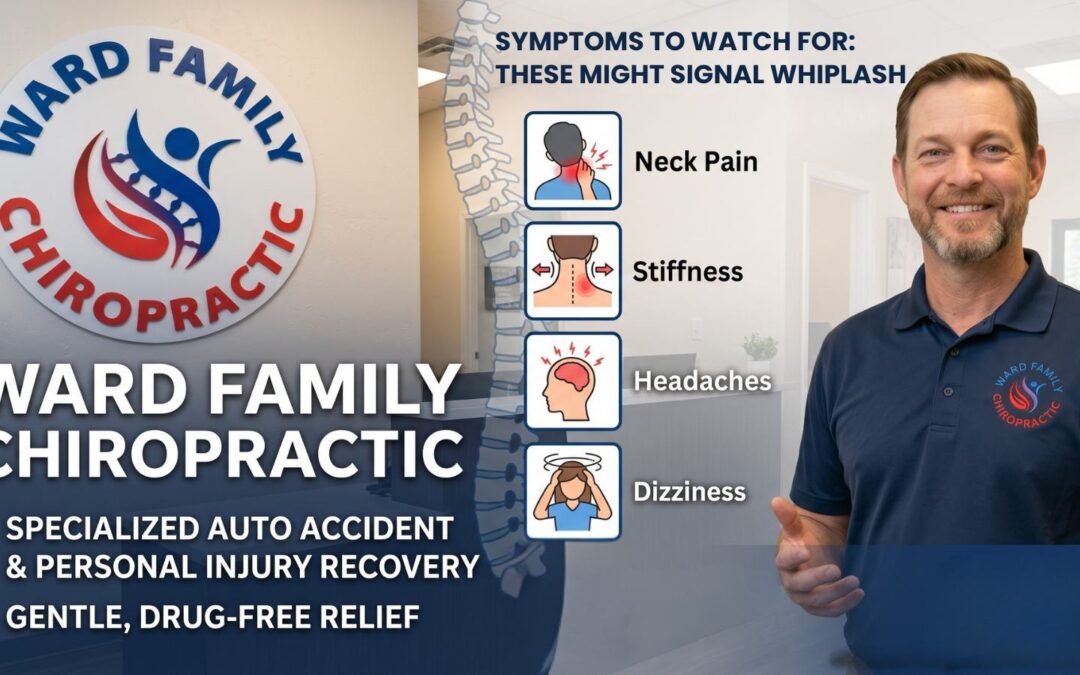
Whiplash symptoms do not always appear immediately after an accident. Adrenaline can mask pain for hours or even days. It is crucial to monitor your body closely for these key indicators:
- Neck Stiffness and Restricted Range of Motion: You may find it increasingly painful or difficult to turn your head side to side or tilt it toward your shoulders.
- Persistent Headaches and Migraines: Headaches that originate at the base of the skull and radiate forward toward the forehead are a classic sign of cervical strain and nerve irritation.
- Shoulder and Upper Back Tension: The impact often affects surrounding muscle groups, leaving your shoulders, upper back, and arm muscles feeling tight, tender, or exhausted.
- Numbness or Tingling Sentations: Irritation to the nerves in the neck can cause a pins-and-needles feeling, numbness, or weakness traveling down into your arms or hands.
- Dizziness and Fatigue: Spinal imbalances and nervous system disruption can cause secondary symptoms like lightheadedness, fatigue, and difficulty sleeping comfortably.
How Chiropractic Care Supports Recovery
Ignoring whiplash symptoms can lead to long-term joint stiffness, chronic pain, and permanent structural issues. Our clinic specializes in personal injury and auto accident recovery, offering non-invasive treatments to help your body heal properly.
Dr. Jason Ward brings over twenty years of experience to evaluate the full extent of your injury. Through precise and gentle chiropractic adjustments, we work to realign the cervical spine, relieve nerve pressure, and restore proper mobility. To support your adjustments, we incorporate corrective exercises to rebuild strength in weakened soft tissue. Additionally, we utilize SolaJet DryWave Massage Therapy to soothe severe muscle tension and promote deep tissue relaxation without added strain on your body.
A sudden accident can be deeply jarring, but you do not have to navigate recovery alone. By addressing spinal misalignments and muscle strain early, chiropractic care helps you heal correctly. Consequently, you can return to your normal routine with total confidence.